
Architectural reference
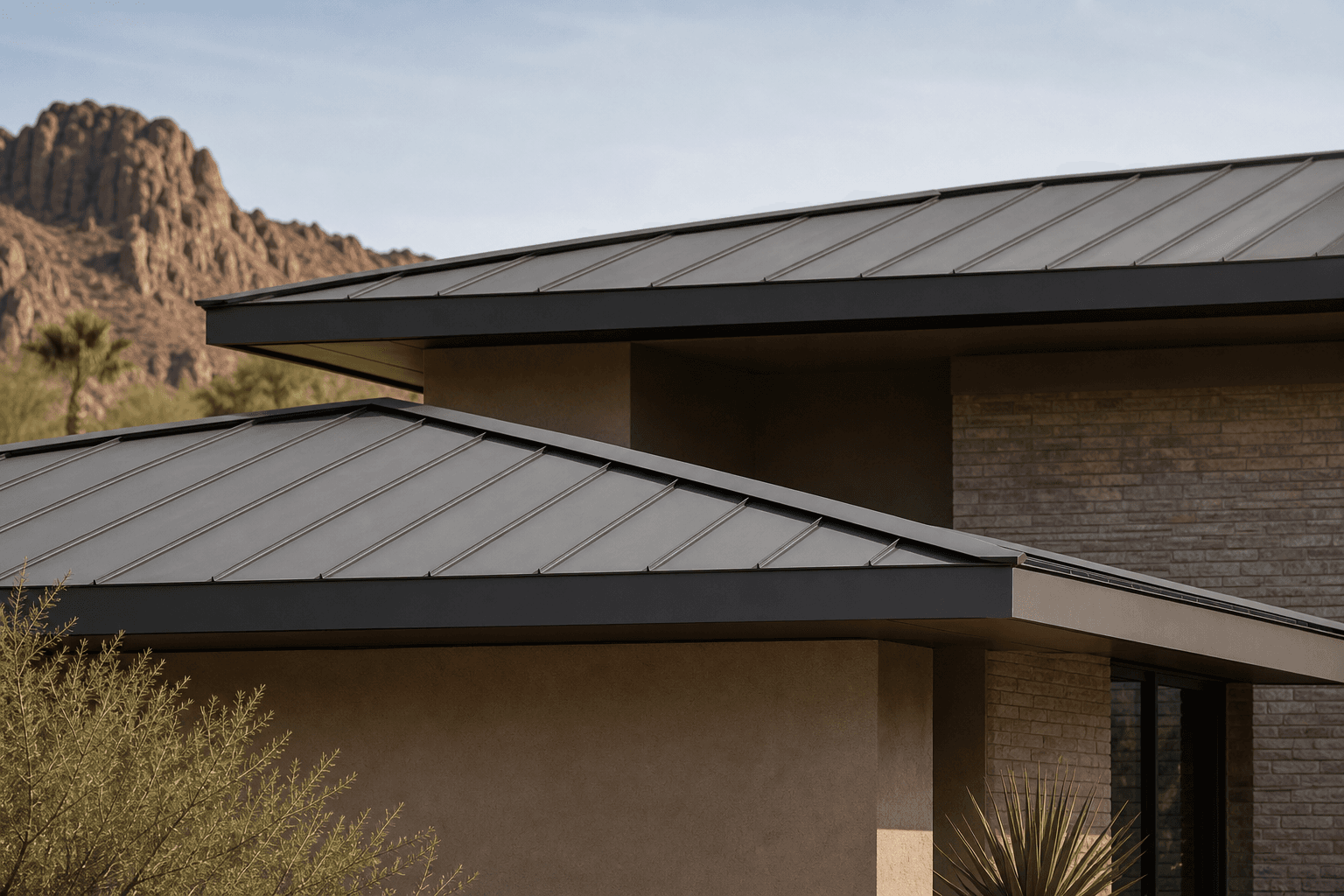
Mid-Century Modern · Standing seam recoat
A Beadle on Mummy Mountain
Coordinated with a current architect to a Beadle elevation; concealed-fastener seamed copper on the west exposure.
Paradise Valley · AZ
A roofing practice built around the architecture, climate, and discretion that Paradise Valley's estate properties require. Manufacturer-certified crews, written specifications, and documentation on every layer.
Estate roofing visual
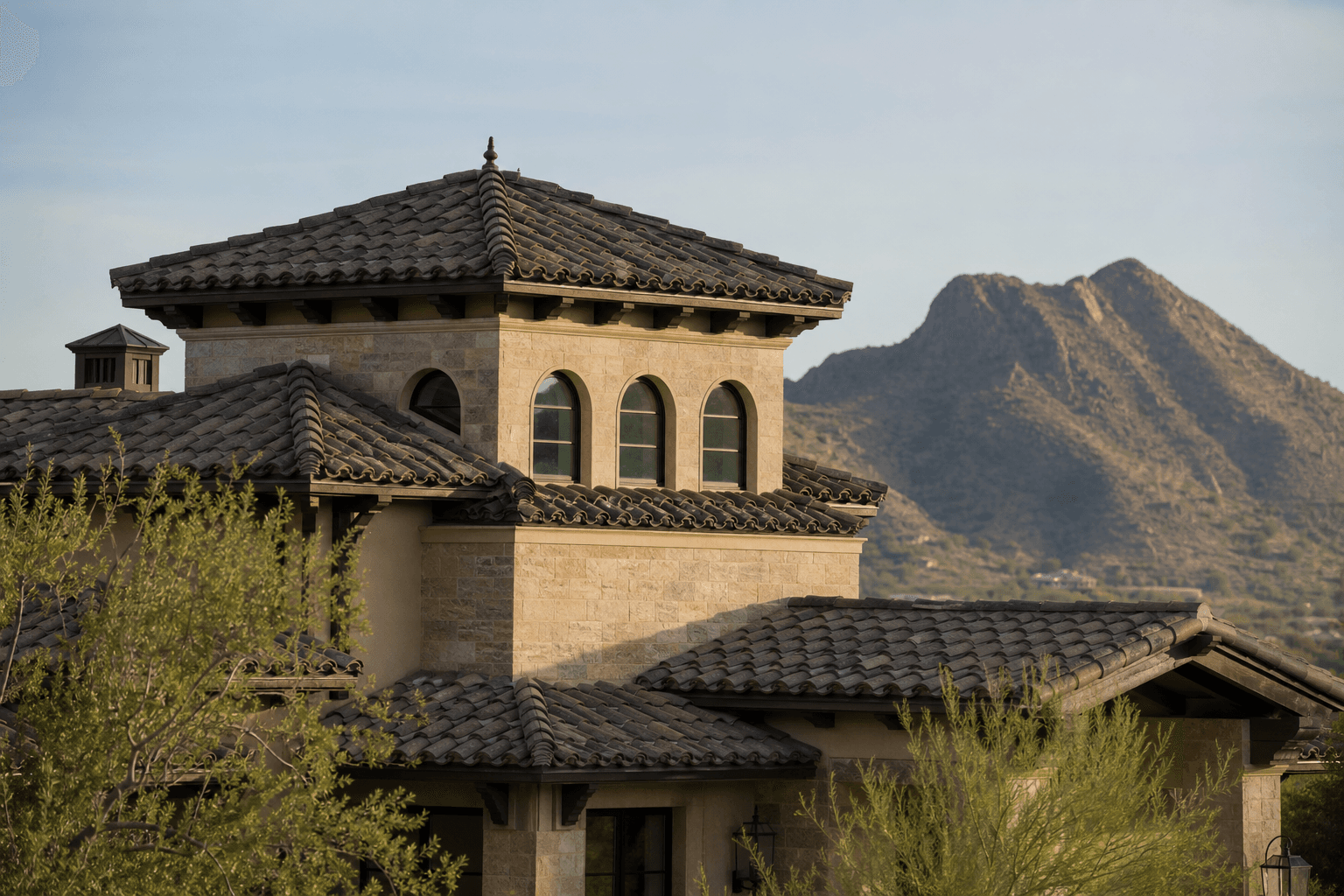
Mummy Mountain, Paradise Valley
The Paradise Valley specification
Paradise Valley is sixteen square miles of low-density estate properties on lots of an acre or more — custom architecture, mid-century landmarks, and contemporary work that won't accept a generic install. The Reserve approach is climate-specific specification, manufacturer-certified install, and full photographic documentation of every layer.
01
The roof exists in service of the house. We work to preserve and protect the original architectural intent, not to override it with whatever's easiest to install.
02
Paradise Valley's heat load, microburst exposure, and UV cycle demand a Sonoran-specific install — synthetic high-temp underlayment, properly fastened, with detailing on the heat-loaded west elevation.
03
Every project is photographed at every layer. The homeowner gets the file. Future owners benefit from it. Memory and verbal assurance are not deliverables.
Craftsmanship
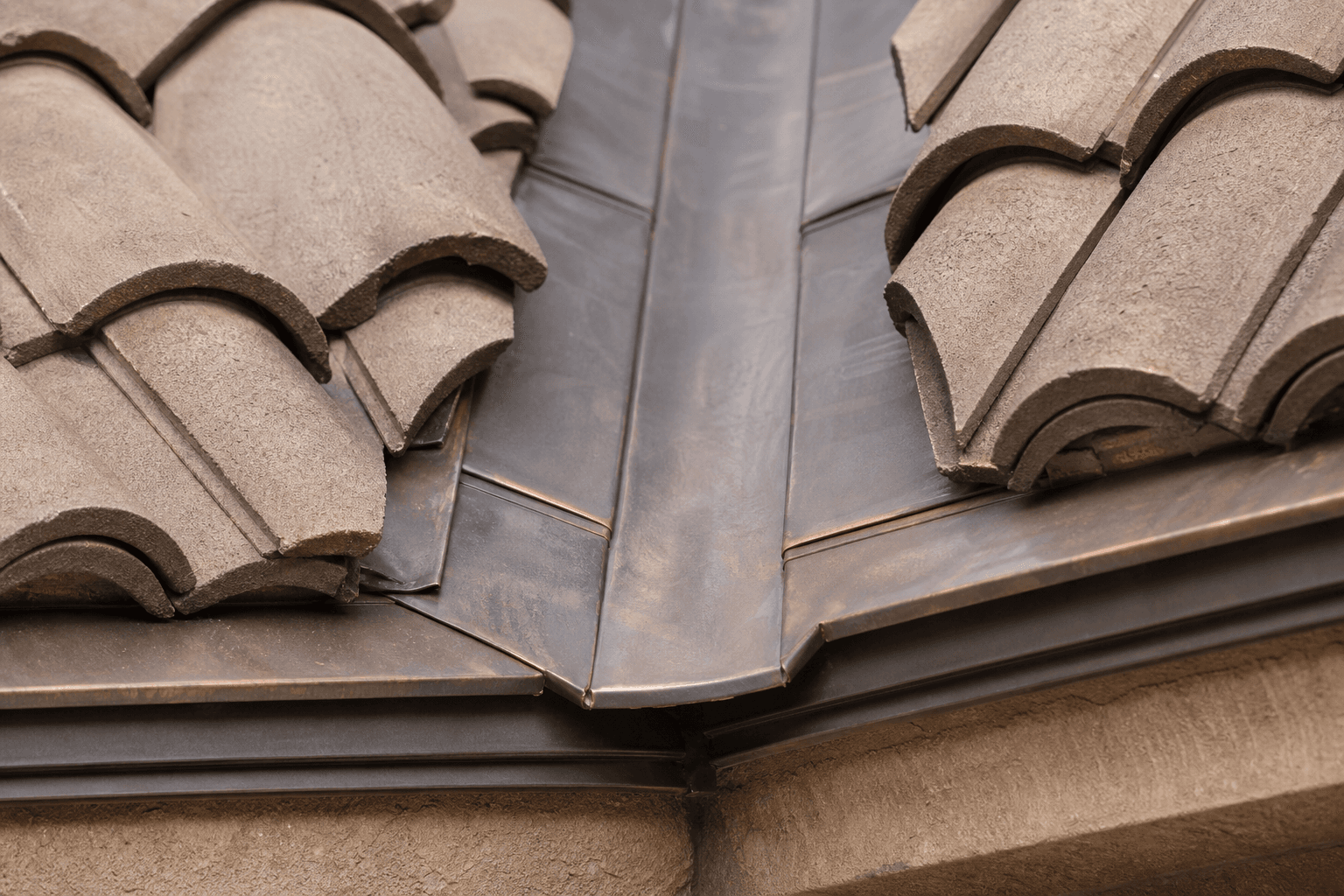
The materials we install are heritage-grade — clay barrel tile, concrete profile-matched, lead-coated copper valleys and flashing, snap-lock and mechanically seamed metal. The work that connects them is more important than any of them individually.
What we install
A short list of services, each one delivered by direct W-2 crews trained on Paradise Valley-specific architectural and climate considerations. We do not subcontract.
Whole-house specification and installation for Paradise Valley estate properties.
The dominant residential roof type in Paradise Valley. Concrete, clay, and heritage tile.
Standard for the low-slope and flat sections common to mid-century and contemporary homes.
Specified on contemporary and Mid-Century Modern remodels along the Lincoln Drive Corridor.
Slate, cedar, and heritage tile profiles for properties where the original specification matters.
Targeted, documented, and respectful of the existing architectural detailing.
The architecture we work in
Mid-century landmarks (Beadle, Haver, Wright disciples), Pueblo Revival on the Camelback Corridor, contemporary custom across Tatum Canyon and the Lincoln Drive Corridor — and a smaller number of heritage projects that require sourcing discontinued materials.
Standing seam, low-slope foam, single-pitch tile elevations. We coordinate with the original architect when one is still practicing, and from drawings when not.
Concrete and clay tile in profile-matched profiles, with proper underlayment for the heat load and detailing that respects the original parapet and vega geometry.
Concealed-fastener metal, large-format tile, integrated low-slope foam — coordinated with the project architect during specification and finish review.
Slate (Vermont, Spanish, Welsh), heritage tile profiles, and cedar shake where allowed by code and HOA. These projects are scheduled around the lead time of the material.
The Reserve process
01
A senior estimator visits, walks the property, and documents the existing system photographically. If your project involves an architect or designer, we loop them in at your request.
02
Within 48 hours, you receive a documented inspection report, a written specification matched to your house's design intent, and a detailed estimate by email.
03
We pull the Town of Paradise Valley permit, manage architectural review submittals where required, and handle inspection scheduling.
04
Direct W-2 crews trained on Paradise Valley-specific architectural and climate considerations. Photographic documentation at every layer.
05
Closed-permit documentation, the project photo file, manufacturer warranty registration, and our workmanship warranty in writing.
Selected projects
Every project published here was photographed with the homeowner's explicit written consent. The portfolio is curated, not exhaustive.
Architectural reference
Mid-Century Modern · Standing seam recoat
Coordinated with a current architect to a Beadle elevation; concealed-fastener seamed copper on the west exposure.
Architectural reference
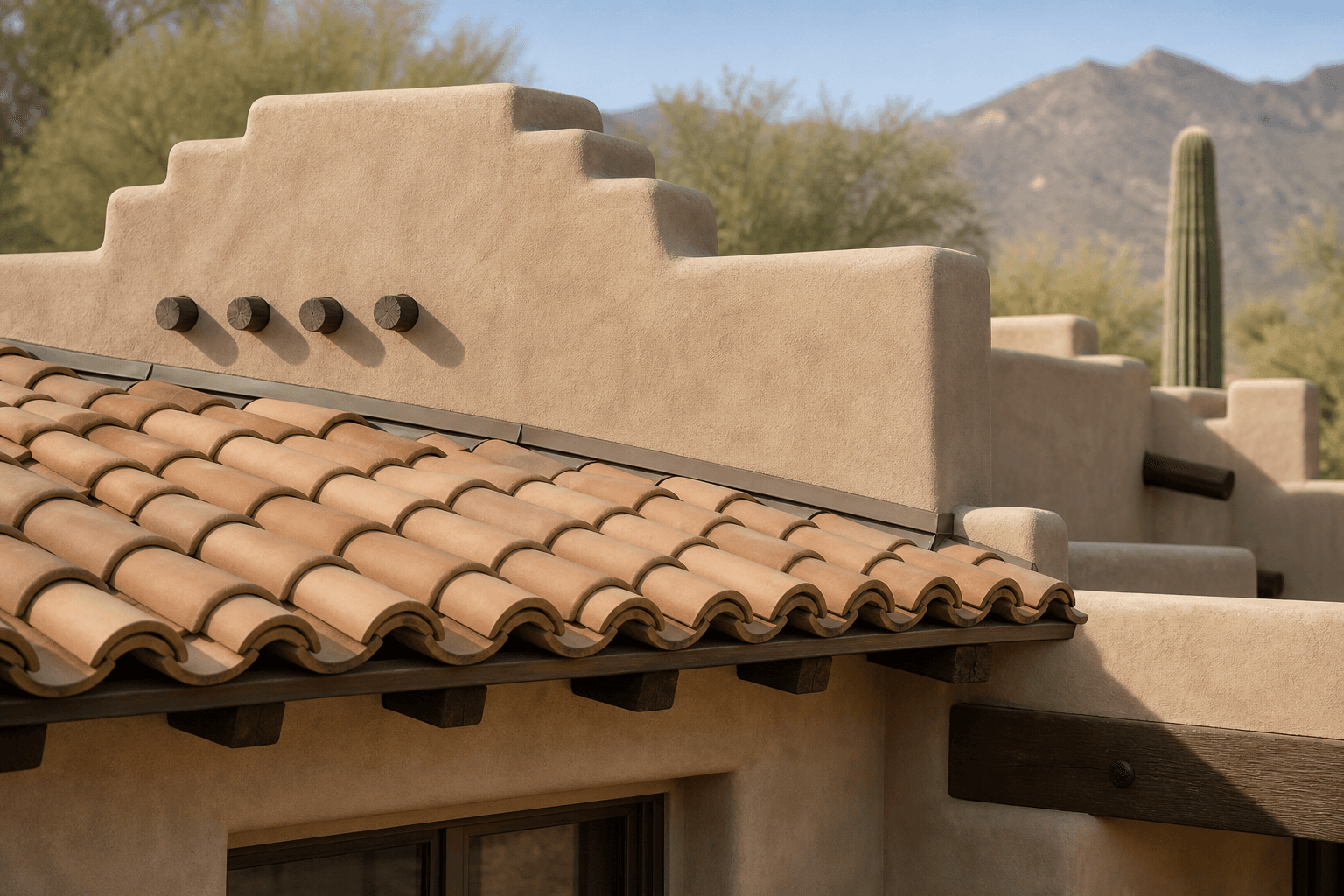
Concrete tile reroof · Synthetic underlayment
Full underlayment replacement with profile-matched concrete tile; town architectural review managed end to end.
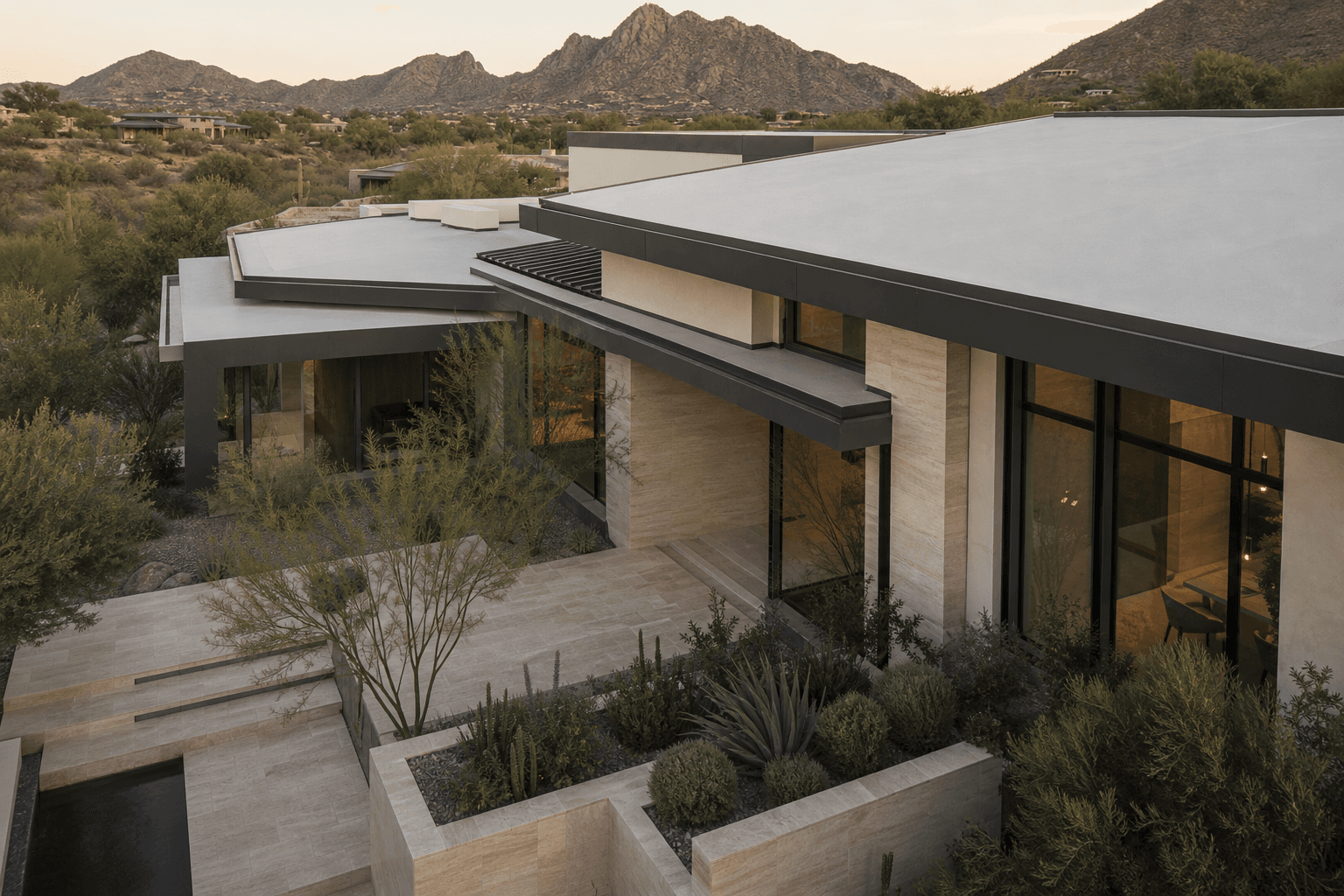
Architectural reference
Foam recoat · 6-year cycle
Documented condition report, two micro-blister repairs, full elastomeric recoat to original specification.
Why Paradise Valley is different
The standard Phoenix tile install is built around a national average — a generic underlayment, a manufacturer-minimum fastener pattern, flashing details borrowed from a different climate. On a tract home in a less considered market, that install is good enough. In Paradise Valley, on a Beadle or a Haver or a contemporary custom on a Mummy Mountain lot, it's not.
A standard 30-pound felt under concrete tile begins UV-degrading within a few summers. By year ten, what looks like an intact tile roof from the curb has an underlayment beneath it that's brittle and no longer waterproof. The first monsoon that drives water sideways is the one that reveals the problem — usually as a stain on the ceiling of a master suite.
The fix is a synthetic high-temperature underlayment, properly fastened, with the right detailing at valleys, penetrations, and the heat-loaded west elevation. Low-slope sections require a foam system specified and recoated on the right cycle. Specialty materials require a tradesperson who has worked with them before. None of this is incremental cost on a Paradise Valley project. It's the spec.
The architecture we work in
Paradise Valley is a single town. The areas below are its principal estate enclaves, mountain corridors, and architectural districts — each with its own review processes, microclimate, and material conventions.
Service Area
Town-wide service across the sixteen square miles of Paradise Valley — single-family estate properties on lots of an acre or more, each one custom.
Visit area →
Service Area
Hillside roofs at altitude — wind exposure, microburst load, and architectural review processes that are stricter than the rest of the valley.
Visit area →
Service Area
The estate corridor wrapping Camelback Mountain — mid-century landmarks, contemporary custom architecture, and strict view preservation.
Visit area →
Service Area
An enclave of low-density estate properties with a long architectural heritage and an active set of preservation expectations.
Visit area →
Service Area
Single-acre and larger lots, predominantly traditional and Pueblo Revival forms with concrete and clay tile dominating the roof inventory.
Visit area →
Service Area
Gated, hillside, with rigorous architectural review. Tile, foam, and standing seam in roughly equal measure across the enclave.
Visit area →
Service Area
Newer custom contemporary architecture on the eastern town border — a mix of low-slope foam, concealed-fastener metal, and large-format tile.
Visit area →
Service Area
Mid-Century Modern and contemporary architecture along the town's principal east-west spine — Beadle, Haver, and the firms that have followed them.
Visit area →
From homeowners and architects
“They specified the roof properly for the climate, coordinated with our office on every detail, and delivered the documentation we expect on a project of this caliber.”
“A discreet crew, a clean jobsite, and the closed-permit documentation in hand. The work matched the rest of the house, which is the entire point.”
“A senior estimator walked the property, photographed it layer by layer, and delivered the spec in writing within 48 hours. That's how this work is supposed to be done.”
Common questions
A short list of the questions Paradise Valley homeowners and their architects ask most often. Longer answers, with documentation, on each service page.
Yes. The Town of Paradise Valley requires a building permit for full reroofs and most structural roof repairs. Paradise Valley's permit process is more restrictive than surrounding cities — visible roof material, color, and slope are subject to review. We pull the permit, manage the inspections, and provide the closed-permit documentation when the work is complete.
Yes. The Town has specific guidelines for visible materials and finishes, particularly on hillside properties and within certain enclaves. Replacement-in-kind is generally permitted; alterations require submittal and review. We've worked the town extensively and handle the submission process directly.
Yes — and we prefer to. When the original architect is still practicing, we'll loop them in directly. When they're not, we'll work from the original drawings or commission a current architect to match the design intent before we specify materials.
The tile itself — concrete, clay, or specialty — will outlast the structure. The underlayment beneath is the consumable component. With a properly specified synthetic high-temperature underlayment, expect 25–35 years before reinstallation. With standard 30-pound felt, far less in this climate.
Almost always a recoat, if the foam itself is intact. A proper recoat every 4–6 years is part of normal foam roof ownership and extends the system's life by decades. We'll inspect, document any moisture intrusion, and recommend recoat versus reinstallation honestly.
It means we do not publish your address, photograph your project without your explicit written consent, post about it on social media, or discuss it with anyone outside the crew. It means our trucks are clean and our crews are presentable. It means scheduling that respects your household, not ours.
It depends on the cause and the policy. Storm damage is typically covered; gradual UV degradation is not. We work with adjusters from every major carrier, document storm-related damage thoroughly, and never inflate scope to manufacture a claim. If we don't believe a claim is honest, we'll tell you.
Schedule
A senior estimator visits, documents the existing system, and walks you through the right specification — in writing, with photos, in coordination with your architect or designer if you have one.